Month: December 2025

  • Multiple Relationships

    Multiple Relationships

    RootsMagic has a feature called the Relationship Calculator. I find it very useful because it has the ability to show multiple relationships beyond just the closest ones. It even presents the relationships in order of closest to furthest.

    Understanding how you’re related to DNA matches and historical figures can reveal fascinating connections in your family tree. When researching genealogy, especially in communities with endogamy or cousin marriages, you may discover that you share multiple relationships with the same person through different ancestral lines. This is where the RootsMagic relationship calculator becomes an invaluable research tool.

    How I use the Relationship Calculator:

    • Set the root person.
    • Select the target person.
    • Check the option to show multiple relationships (if applicable in your version).
    • Run the calculation and interpret the list.

    The use of this tool makes it easier to find and verify endogamy, which is basically the marriage of cousins Most online trees only show one relationship, which can hide valuable.

    The Relationship Calculator helps my research by:

    • Identifying pedigree collapse and endogamy.
    • Explaining unusually high DNA match amounts.
    • Spotting overlooked surname or locality connections.

    Most online programs focus on the most direct relationship it finds. Using the Relationship Calculator has helped me broaden my research horizons and led me to new and exciting connections

    Finding Multiple Relationships with RootsMagic: A Real Example

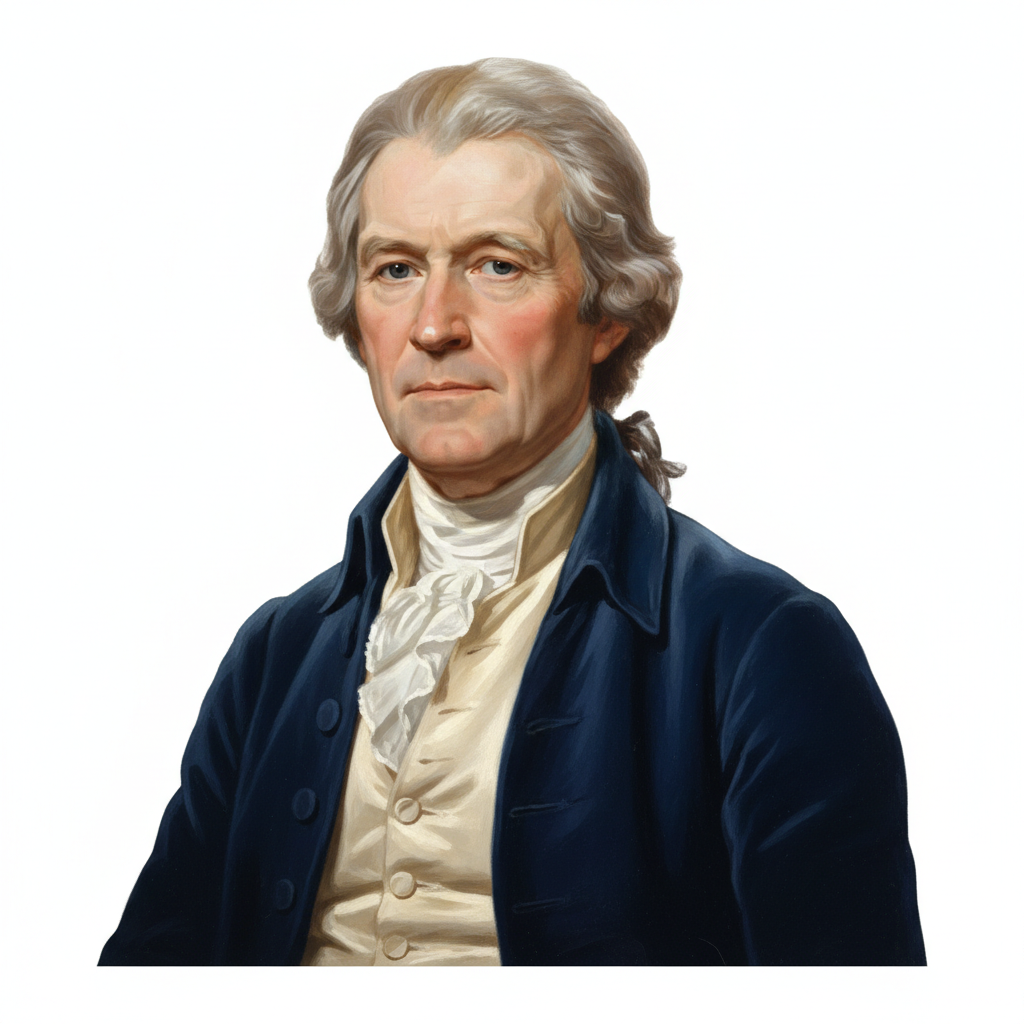
    The screenshot above demonstrates this feature perfectly. In my own research, I discovered that Thomas Jefferson and I share multiple relationships through different ancestral lines. The calculator revealed both a half twelfth cousin 3 times removed relationship through Margery Venables, and a thirteenth cousin 3 times removed relationship through William Mainwaring and Elizabeth Leycester. Without this tool, I might have only known about one of these connections and missed valuable research opportunities.

    Whether you’re working with DNA matches, exploring endogamous communities, or simply curious about all the ways you’re connected to your ancestors, the RootsMagic relationship calculator is an essential tool for thorough genealogical research. Try using it on your tree today to discover hidden connections you might have overlooked.

    Screenshot of RootsMagic relationship calculator showing multiple relationships between Thomas Jefferson and Russell Leighton Filip with common ancestors

  • Barbora Kabátová

    Barbora Kabátová

    A MyHeritage Match Takes Me Back to My 4th Great-Grandmother in Bohemia

    Recently, I got one of those exciting notifications from MyHeritage: a relative match popped up in someone else’s family tree—and it’s from Germany! What made it even more thrilling? This connection traces back to my 4th great-grandmother, Barbora Kabátová, on my paternal line. It’s moments like these that remind me why I love DNA genealogy.[1]

    The Personal Backstory That Started It All

    A few years ago, I used DNA testing to uncover my father’s birth parents after his passing—a breakthrough that healed old family mysteries. Now, this new match is linking me to descendants across the ocean. It’s proof that our roots run deep and DNA can bridge continents and centuries.[2]

    Meet Barbora Kabátová: My 4th Great-Grandmother

    • Born: 1746 in Olešná, Liblín Parish, Rokycany District, Plzeň Region, Western Bohemia, Czech Republic
    • Died: 30 Dec 1814 in Olesna 8, Liblín, Plzeňský, Czech Republic

    In MyHeritage, she’s right there in my tree with zero direct DNA matches listed yet… but this German tree hint changes everything. Clicking through revealed shared segments and surnames tying us to her descendants.[1]

    Why This Feels Like Magic

    • Cross-Border Connection: A tree from Germany matching my Czech ancestor? It highlights how families migrated through Europe.
    • Next Steps I’m Taking:
      • Add DNA matches descending from Barbora (MyHeritage’s “Add to Tree” feature).
      • Use the Chromosome Browser to visualize shared segments.[1]
      • Message the tree owner—fingers crossed for photos or stories!

    If you’re building your tree, keep those MyHeritage emails coming—they’re goldmines for surprises like this. Have you had a match connect distant countries? Share in the comments!

    Affiliate Disclosure: Links to MyHeritage may earn a commission (at no extra cost to you). #Ad #MyHeritageAffiliate Full Policy.[1]

    Created with assistance: OpenAI. (2023). ChatGPT (May 24 version) [Large language model]. https://chat.openai.com/chat

  • Untitled post 908

    Building Your Family Tree: The Tortoise Approach to Genealogical Success

    The race between the tortoise and the hare offers a timeless lesson—one that applies perfectly to genealogy. The hare sprinted ahead with enthusiasm but lost focus, while the tortoise moved steadily, methodically, and ultimately crossed the finish line. When building your family tree, especially as a beginner, embrace the tortoise’s wisdom.

    Why Speed Can Lead You Astray

    It’s tempting to accept every hint and suggestion that genealogy websites offer. These platforms are designed to be helpful, showing you potential relatives and connections with just a few clicks. However, hints are generated by algorithms, not historians. They’re educated guesses based on matching names, dates, and locations—but they’re not always accurate. A hint might lead you down a rabbit hole, connecting you to the wrong branch of your family entirely, wasting hours of research and potentially corrupting your family tree with false information.

    The Foundation: Sources and Documentation

    Here’s what separates a solid family tree from a flawed one: sources and documentation. Every ancestor and relative you add to your tree should be supported by evidence. When you encounter a hint, treat it as a starting point, not a conclusion.

    Document multiple sources for each person you add to your tree. These sources might include:
    Birth, marriage, and death certificates
    Census records
    Church records
    Newspaper articles
    Land deeds or property records
    Military records
    Family letters or photographs

    When you gather multiple sources that point to the same information, you’ve verified the hint’s accuracy. When sources contradict each other, you’ve discovered an inconsistency worth investigating further. Either way, you’re building knowledge, not just a list of names.

    Building Methodically: Your Step-by-Step Approach

    Start with what you know. Begin with yourself and work backward through your parents, grandparents, and great-grandparents. Document each generation thoroughly before moving to the next.

    Establish a solid paper trail. Before accepting a hint, research it independently. Look for corroborating evidence. Compare new information to your known family tree and spot inconsistencies. If something doesn’t fit, dig deeper rather than forcing it into place.

    Keep organized records. Maintain a fact-checked master list of dates and events as you research. Use consistent date formatting throughout your work. Note where each piece of information came from and what questions remain unanswered.

    Verify hints carefully. When a website suggests a connection, ask yourself: Does this match what I already know? Are there multiple sources supporting this? Could this person be a different individual with a similar name?

    The Reward of Patience

    Building your family tree methodically takes longer than clicking through hints, but the result is a family history you can trust and share with confidence. Your descendants will appreciate the careful work you’ve done, knowing that the stories and connections in your tree are grounded in evidence.

    Be the tortoise. Move steadily. Document thoroughly. Verify carefully. Your family tree will be richer, more accurate, and infinitely more meaningful for the time you invest in doing it right.
     

    Created with assistance: OpenAI. (2023). ChatGPT (May 24 version) [Large language model]. https://chat.openai.com/chat

  • Untitled post 842

    RootsMagic: Comprehensive Genealogy Software for Every Level of Researcher

    Genealogy research can be a rewarding yet complex endeavor, requiring tools that balance ease of use with powerful features. RootsMagic stands out as one of the most versatile genealogy software programs, designed to support users ranging from those just starting their family history journey to seasoned genealogists managing extensive data.

    This review is based on personal use and opinions and is not sponsored by RootsMagic or any other company. I did not receive any payment, free products, or other compensation for writing this article, and there are no affiliate links associated with it.

    Benefits of RootsMagic for Beginners

    For those new to genealogy, RootsMagic offers an intuitive interface that simplifies the process of building a family tree. Beginners can easily enter basic information, attach sources, and generate charts without feeling overwhelmed. The software’s guided workflows and clear documentation help users understand best genealogical practices, making it an excellent starting point for novices.

    Advantages for Intermediate and Experienced Genealogists
    As users gain experience, RootsMagic grows with them by providing advanced features such as:
    Robust Data Management: RootsMagic allows detailed recording of individuals, families, events, and sources, accommodating complex family relationships including adoptions and multiple marriages.
    GEDCOM Compatibility: The software supports reliable import and export of GEDCOM files, preserving custom tags and extended data, which is crucial for data integrity and collaboration with other genealogy tools[1].

    – Relationship Calculations and Consistency Checks: RootsMagic offers tools to calculate relationships and verify data consistency, helping researchers maintain accurate and reliable family trees[1].
    – Integration with Online Resources: Users can connect RootsMagic to popular genealogy websites, facilitating record searches and online syncing to enhance research efficiency.
    – Customizable Reports and Charts: The software provides a variety of visualization options, from simple pedigree charts to detailed family group reports, which can be tailored to the user’s needs.

    Why RootsMagic Appeals Across the Spectrum

    RootsMagic’s blend of user-friendly design and powerful capabilities makes it a preferred choice for genealogists at all levels. Beginners appreciate its accessibility and support, while experts value its comprehensive data handling and compatibility features. The active user community and ongoing software updates ensure that RootsMagic remains a reliable and evolving tool for family historians.

     References

    [1] Behold Genealogy, “Behold Future Plans,” detailing RootsMagic GEDCOM export improvements and relationship features, available at beholdgenealogy.com/future.php

    [2] GenealogyReviews, “Artificial Intelligence for genealogy | Family Tree Maker 2024,” YouTube video explaining plugins and data cleaning related to RootsMagic, available on YouTube

    [5] WingetGUI, “RootsMagic.RootsMagic.11,” listing the latest version and features of RootsMagic genealogy software, available at wingetgui.com/allapplist

    Created with assistance: OpenAI. (2023). ChatGPT (May 24 version) [Large language model]. https://chat.openai.com/chat

  • František Antonín Václav Filip

    František Antonín Václav Filip

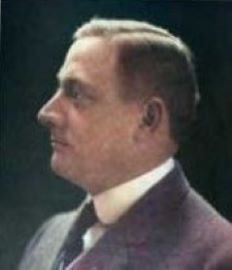
    FRANK FILIP SR.

    Biographical Profile

    Career Overview
    “With large capacity for labor and wise in its distribution and application,” Frank Filip worked his way upward from a humble position to a prominent place in the financial circles of Cedar Rapids, serving as cashier of the Security Savings Bank.​

    Early Life and Immigration
    Born in Bohemia on September 20, 1875, Frank Filip was the son of Anton and Marie (Seidl) Filip, both natives of Bohemia. The family left their native land in 1887 and landed at Baltimore, Maryland, on August 12, arriving in the United States as strangers in a strange land.
    After receiving reports concerning Cedar Rapids, the family directed their steps to this destination and arrived safely. Frank’s father initially worked as a millwright and later gave his attention to the trade of a machinist, remaining in that industrial field until his death on February 28, 1908. His wife survived him and resided with their son Frank.​

    Education and Early Career
    At age twelve, Frank Filip accompanied his parents to America, supplementing his education acquired in Bohemian schools by study in Cedar Rapids public schools and instruction from a private tutor. During his youthful days he manifested notable ambition and enterprise, and during vacation periods was always employed, seeking service that would yield good remuneration.​
    At sixteen years old, Frank was apprenticed to John Thomas, a harness-maker, where he remained for three years, diligently applying himself to master the business. Though he became very competent and could command good wages, a misunderstanding with the foreman led him to give up his position.​

    Banking Career
    Frank Filip began as a laborer earning $1.15 per day for the old Burlington, Cedar Rapids & Northern Railway Company. Through the intercession of John E. Playter, then teller at Cedar Rapids National Bank, he became a messenger in the Security Savings Bank on December 21, 1894.​
    From this humble position, he gradually worked his way upward, advancing in recognition of his industry and ability. After filling various positions in the bank, he was appointed assistant cashier in January 1904. His work became a training school for the duties that now devolve upon him as cashier, appointed on January 12, 1909. ​
    “His labors are now contributing to the success of the institution and his record proves the efficacy of unfaltering industry and perseverance, combined with business probity above question”.​

    Personal Life
    On November 12, 1902, Frank Filip married Marie A. Burianek of Cedar Rapids. They had three children: Frank, Edward, and Rosemary. ​

    Community Involvement

    Political Affiliation: Republican, exercising his right of franchise for the best interests of the community while remaining untrammeled by party ties in local affairs. ​
    Fraternal Organizations:
    Sokol Gymnastic Association (member, 1909 coach and trainer)
    Crescent Lodge, No. 25, A. F. & A. M. (past master, now treasurer)
    Trowel Chapter, No. 49, R. A. M.
    John Plus Lodge, No. 51, I. O. O. F.
    Lodge No. 251, B. P. O. E.
    Bohemian Amateur Dramatic Club
    C. S. P. S. and several other Bohemian fraternal societies​
    Athletic Achievements: In 1909, Filip coached and trained a team of six men from the Sokol society that competed nationally against all Slavonic societies. The team won the Amateur Athletic Union gymnastic championship of the United States in Chicago on April 29, 1910. ​

    Character Assessment
    The historical account describes Filip as “a perfect specimen of the athletic man, of splendid physical proportions,” who has won considerable fame in athletic circles. He is characterized as “a self-made man, for from boyhood he has been self-dependent and self-reliant,” having worked in a grocery store in summer and chopping wood in winter after serving his harness-making apprenticeship.

    Source Citation

    Bibliography:
    Brewster, Luther A., and Barthinius L. Wick, eds. History of Linn County Iowa: From Its Earliest Settlement to the Present Time. Vol. 2. Chicago: Pioneer Publishing Company, 1911. 531-533. Print.
    Online Access:
    Internet Archive. History of Linn County Iowa: From Its Earliest Settlement to the Present Time. Digitized text version. https://archive.org/stream/historyoflinncou22brew/historyoflinncou22brew_djvu.txt

  • Ancestry.com

    Ancestry.com

    Ancestry.com is one of the best resources for building a family tree and conducting genealogical research. It offers a variety of membership levels for research. You can also use Ancestry.com to complete a DNA test. The results of the DNA tests are matched to other members who have completed a DNA test. This is a great aid in helping to guide research and verify relationships

  • Susannah North Martin

    Susannah North Martin

    Susannah North Martin was one of the most tragic figures in the infamous Salem Witch Trials of 1692. Born in 1621 in England, she emigrated to America with her family and settled in Salisbury, Massachusetts, where she married George Martin and raised a family. Known for her strong will and independent spirit, Susannah was a devout Puritan and a respected member of her community—until suspicion and hysteria turned her life upside down.

    In May 1692, Susannah was arrested and accused of witchcraft, largely due to her reputation for being outspoken and her refusal to conform to the strict social norms of the time. At her trial, she faced a barrage of accusations, including claims that she had bewitched neighbors and caused illness and death. Despite her steadfast denial and her eloquent defense, she was found guilty and sentenced to death.

    On July 19, 1692, Susannah North Martin was hanged on Gallows Hill in Salem, along with four other women. Her execution was a grim reminder of the dangers of mass hysteria and the devastating consequences of false accusations. Susannah’s name is now inscribed on the granite memorial at the Salem Witch Trials Memorial in Salem, Massachusetts, honoring the 20 victims of the trials.

    Susannah North Martin’s story is a powerful testament to the resilience of the human spirit in the face of injustice. Her legacy continues to inspire those who fight for truth, justice, and the rights of the accused.

    Created with assistance: OpenAI. (2023). ChatGPT (May 24 version) [Large language model]. https://chat.openai.com/chat

  • Real World Hint

    Real World Hint

    This is what I learned in adding a great-grandmother, Dollie, to my family tree. When I searched for her using just “Dollie Northrop,” I didn’t find many hints or records. But when I used her legal name, Belva Northrop, I found many more!

    This shows how important it is to learn both your ancestor’s legal name and any nicknames they used.

    I also found that including exact birth and death dates helped me get better results. In my family tree, I list her as:
    Belva Northrop, 1893–1958

    But her full details are:

    • Born: 19 March 1893 in West Union, Fayette County, Iowa
    • Died: 16 September 1958 in Anaheim, Orange County, California

    The more precise your information, the easier it will be to find accurate records and hints.

    • Try searching with different name combinations—like Belva, Dollie, or even initials.
    • Check old family documents, birth certificates, or obituaries to find your ancestor’s full legal name.
    • Many websites use exact matches, so small changes in spelling or name order can make a big difference.